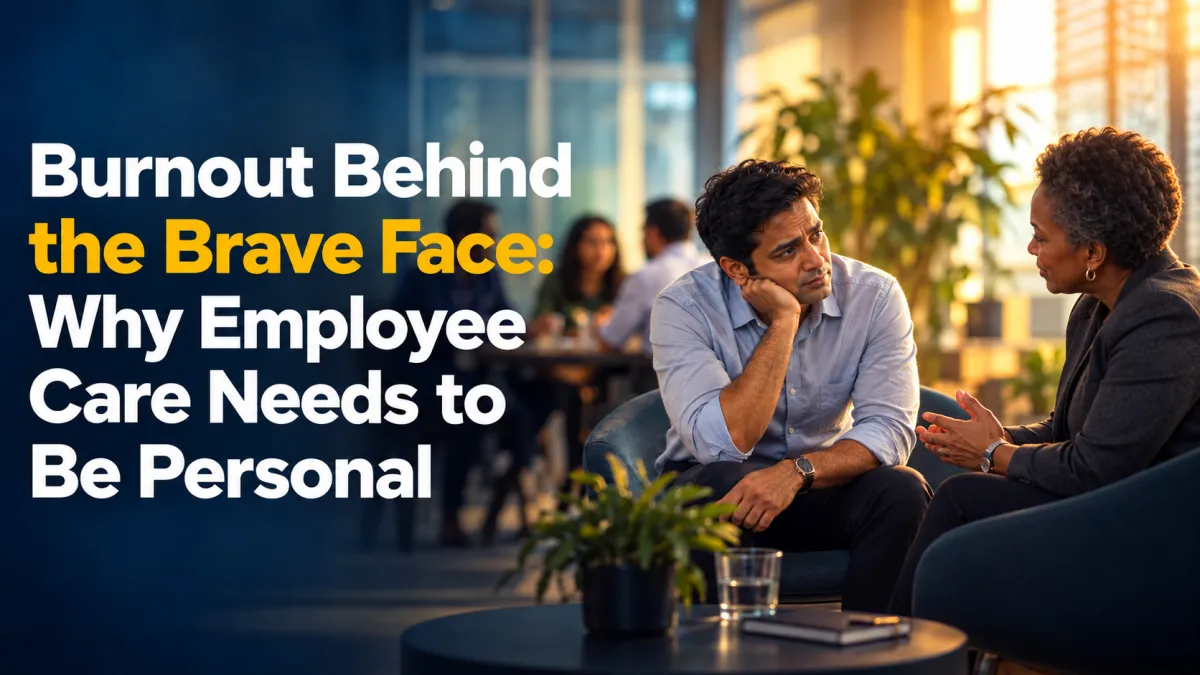
Burnout Behind the Brave Face: Why Employee Care Needs to Be Personal
An employee can arrive on time, meet deadlines and say they are “fine”, while feeling increasingly exhausted. For employers, that raises an important question: how easy is it for someone to ask for help before their situation becomes a crisis?
Research published this September by Vitality offers a timely reason to look more closely at the pressures people face—and whether the support available feels accessible.
What the research tells us
The research, conducted by Opinium among 1,000 employees, found that:
40% said their job was a primary source of stress.
67% believed they had experienced some form of burnout in the previous 12 months.
Only 58% felt they had enough time to look after their mental health, and 61% their physical health.
These are employees’ reported experiences, rather than clinical assessments. Nevertheless, they give employers a strong reason to listen.
Gary Impett, Director of Corporate at VitalityHealth, commented:
“The findings reinforce that there is no one-size-fits-all approach to employee wellbeing.”
He also highlighted the value of understanding individual pressures and tailoring support accordingly.
Understanding the person behind the job
Workplace demands can sit alongside financial worries, caring responsibilities, relationship difficulties, bereavement or concerns about health.
Research from GRiD, reported by COVER, found that Millennials were particularly affected by stress and anxiety relating to finances and debt (43%) and home life (42%).
Commenting on the findings, GRiD spokesperson Katharine Moxham emphasised that pressure affects different age groups, each facing distinct challenges.
For employers, the practical lesson is to ask rather than assume. Two colleagues doing the same job may need very different support. One might benefit from clearer priorities; another may need a confidential conversation and help accessing specialist advice.
Why waiting for people to speak up can leave a gap
In separate Vitality research reported in May, just 5% of respondents said they would speak to their manager about their mental health. Among workers surveyed, 41% had considered taking time off because of stress, burnout or poor mental wellbeing.
Dr Arun Thiyagarajan, CEO of VitalityHealth, warned that relying on people to escalate serious concerns risks leaving individuals without support.
That should prompt a useful conversation within every organisation: do employees know where to turn, understand confidentiality, and feel comfortable taking that first step?
A manager may be supportive, yet an employee may still prefer to speak to someone outside their reporting line. Providing another route creates more opportunities for a conversation.
Address the causes as well as offering care
The World Health Organization describes burnout as an occupational phenomenon arising from chronic workplace stress that has not been successfully managed, involving exhaustion, distance or cynicism towards work, and reduced professional effectiveness.
Employers therefore need to consider how work is organised alongside individual support.
The HSE’s Management Standards identify six areas to examine: demands, control, support, relationships, role and change.
A practical starting point is to:
Review workloads, staffing and competing priorities with employees.
Give people clarity about their responsibilities and organisational changes.
Equip managers to listen and respond sensitively.
Offer accessible, confidential support and explain how it works.
Follow up on concerns and check whether agreed changes help.
These actions connect care for individuals with improvements to everyday working conditions.
How P3 makes care personal
At P3 Business Care, our approach is built around being Personal, Proactive and working in Partnership.
Regular workplace contact gives our Business Partners opportunities to develop relationships, listen and help people access appropriate support. Our care also extends to immediate family, recognising that pressures at home can affect working life.
A client testimonial from Evolution Power Tools, published on our website, captures the value of that relationship:
“We appreciate your independence, dedication and professionalism.”
P3 works alongside employers’ existing support arrangements. Our aim is to make it easier for people to have a conversation early, with someone they know and trust.
As you review employee wellbeing this autumn, consider how support feels from an employee’s perspective. Who would they speak to? How would they reach them? What happens next?
Contact P3 Business Care to discuss how personal, proactive employee care could support your people and your organisation.
Because People Matter.
